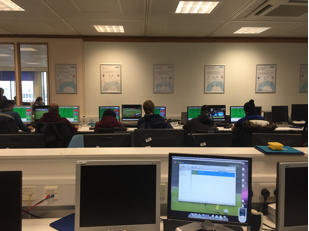
Opta Analytics

IMG_0885 (2) Untitled2

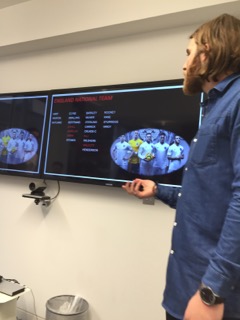
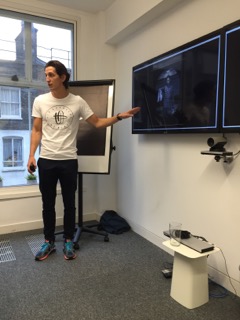
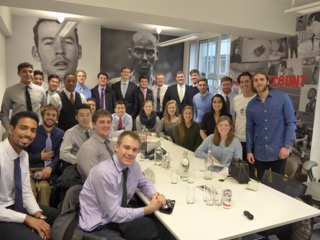
For today’s trip we visited Opta Sports Data. This was definitely one of the most exciting visits on our trip so far. Opta uses cutting edge statistics and compiles data for some of the biggest soccer clubs in Europe along with many different sports. Our visit mostly revolved around looking at statistics for soccer and how they use them. To begin, we split into two groups. One group listened to a presentation on what Opta does with the statistics and the other group looked at how statistics are actually taken.
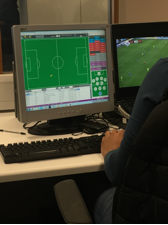
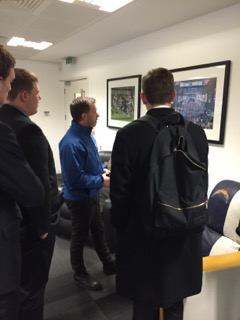
Untitled1Our group began by looking at the actual collection side of things first. It was extremely interesting. Data collectors watch matches real time on one screen, on the other screen they try to keep up with play. They are tasked with watching and recording every movement of the ball, who it’s done by, where on the pitch it’s done and anything else that may occur. Three collectors are assigned to a game, one per each team and one person is tasked with checking their work. They sit at stations that look like these and have to rapidly enter different combinations of keys and mouse clicks. The rewards for this work are plentiful. Opta data collectors can work part time, only a few games a week, and make the same amount of money as someone with a good full time job. While this may seem like a dream job for many, the process to get to sit behind the desk is extremely rigorous. Data collectors must undergo a six week, non-paid, training process where many of those participating will never actually get a job. Of the hundred people that Opta brought in for training, only three were good enough to cut it at Opta. Opta was looking for five before the process even began. Obviously, it is not as easy as watching a game and clicking a mouse, there’s a lot that goes into collection. Opta provides statistics to every team in the premier league along with Barcelona, Real Madrid, Bayern Munich and PSG, just to name a few.
IMG_0893
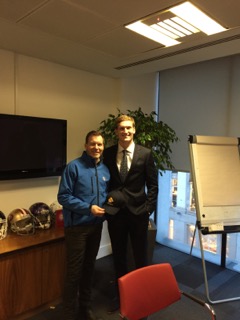
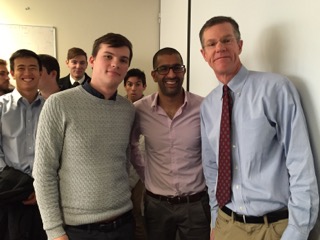
Bob with our Opta hosts. Note: Danny photobombing in the background.

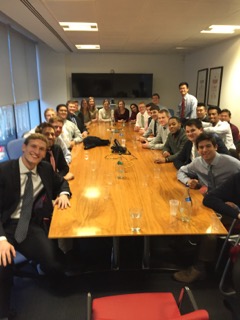
On Saturdays this entire room is filled with Opta employees watching and recording every movement of the ball. These statistics are then used by teams to evaluate and improve their level of play. During the presentation we were able to observe just how much can be done with this data. Opta packages the information and puts it together in very understandable and easy to use platforms. In any given game Opta can show exactly how many passes each player completed and didn’t. They can see who each player passes to most and which two players on a team connect the most throughout a match. Opta can use its VideoHub Elite to show footage from any given match for any given player. Using VideoHub Elite you can look up a player and select goals, from here you will see a pitch map showing every goal the player has scored in their professional career, whether it be international or club. On this pitch map you can click on each individual goal and watch footage of the goal itself. It is truly incredible to see just how much Opta is revolutionizing the way in which data is collected and all of the different platforms that allow users to analyze the game at an even deeper level.

Our trip to Opta was truly an eye opening experience into the future of sports and sports analytics!


– Ian, Joey, Brandt, Adi, Owen

IMG_0894

Fulham FC

outside stadium
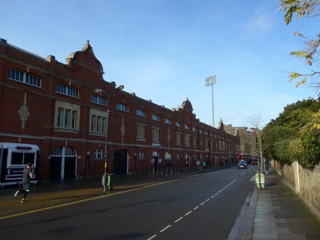
Outside Craven Cottage

Our next class trip was a Saturday afternoon at Craven Cottage to watch Fulham play Hull City. Our day started with a tour of Craven Cottage, where our first stop was the 110-year-old press stand.

craven cottage
Outside the Cottage, which contains the dressing rooms and seating for the players’ family and friends

stadiumThis is the view of the pitch from the stand. We then headed over to the historical cottage itself, but unfortunately we were not able to go in. The entrance to the dressing room is below, and the friends and family of Fulham players get to watch the matches from prime seats on the porch.

managers seats
Team seating

Next, we headed onto the pitch toward the team seats. Here is the bench area, as well as the view from the team seats.

Behind the stand was the riverside area of the ground. Along the Thames, there were food booths and the entrances to several VIP boxes. The area underneath the riverside stand also held the Brian McBride bar, named after the former Fulham captain and United States star.mcbride

McBride was one of several American players for the club, including current players Tim Ream and Emerson Hyndman, who featured in starting and substitute roles, respectively. Inside the bar were McBride’s cleats and jersey.

After a break for lunch in the area around Craven Cottage, we returned for the 3:00pm kickoff. We were seated in the Fulham section and their supporters were lively and very vocal. The quality of the players was noticeably worse than the Premier League matches that we have watched, but the atmosphere of the match more than made up for it. The game started with a fair amount of attacking from both sides, but neither team could convert their chances. As the match went on, the chances dwindled as Fulham started playing safer football. However, this would prove to backfire in the 80th minute when Hull’s Abel Hernandez converted a penalty into the bottom left corner to put Hull City up 1-0, despite Fulham keeper Andy Lonergan getting a hand to the ball. Fulham’s defensive strategy proved to backfire, as the game would end without another goal. Here is a photo from BBC Sport of the penalty.

group shot
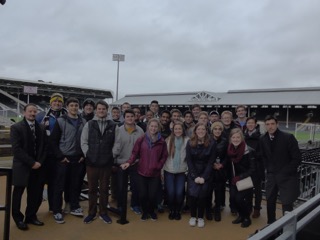
Group shot from our tour (@FulhamFC later tweeted this photo and gave Carleton College a shout out!)

Fulham fans were still very supportive of their team at the end of the match as they put a valiant effort. We returned to Ability Towers on the tube after a lovely day at Craven Cottage.


– Joey, Owen, Adi, Brandt, Ian

Nike UK

23/01/16

charlie
Lewis describes Nike’s strong presence in English “football”
lewis
Charlie shows us all the incredible perks of being a Nike athlete

On Friday morning, the crew headed to Nike’s UK offices to talk with Lewis Maddison and Charlie Moone, two marketing specialists. The two representatives took us through a presentation on football endorsements throughout the English Premier League, and gave us insider’s insight into how the process works. At Nike, the endorsement team works to expand their brand name and prestige through two means; signing star footballers, and gaining high percentages of SOP (share of pitch). A lot of times, this means that Nike ends up signing kids from the age of 12 in order to secure their loyalty to the brand for years to come.

For each of their clients, Nike will supply new boots, training wear, and leisure clothes, as well as a sort of VIP trip to the Nike Town store in downtown London. It was hard to image the lifestyle of a young teenager who signed their first endorsement contract, who receives new boots and clothes free of cost. As the players progress in age and popularity, their contracts with Nike will change accordingly, including larger amounts of money to spend on Nike apparel, more allowances for boots, and even pay for representation. It is said that when a player is searching for a new contract or new sponsor, they wear black boots, which is meant to signal a response from said sponsor, which I found to be interesting.

group 2
Group shot in the Nike UK offices

In terms of endorsement success, Nike currently has contracts with 60% of EPL players, followed by Adidas’ 30%, and the other 10% shared amongst the smaller brands. In a short 21 years, Nike has expanded its empire into the British football realm, and now holds deals with players such as Wayne Rooney, Alex “the Ox” Oxlade-Chaimberlain, Raheem Sterling, Kevin De Bruyne, and other star players. Although the marketing team has the challenging job of keeping many of the football world’s biggest divas happy, they did mention that much of their job is made easy due to their continued innovation of their production lines, and the overall prestige that comes with the brand name. In all, the visit was great and it gave us all a different insight into the money behind football.

nike signs
Charlie and Lewis got some new Carleton Nike swag after the presentation


-Stephen, Acer, Maggie, Ethan & Nick

Southampton FC, Saint Mary’s Stadium, and Southampton Academy


We started the day bright (well, dark because the sun had not yet risen) and early at 7:00 AM. We had a two and a half hour bus ride from our apartments in central London to Southampton.  This gave us a full day to spend the day at the youth academy that produced and developed international stars such as Gareth Bale, Alex Oxlade-Chamberlin, Theo Walcott, Adam Lallana, and Luke Shaw. What an extraordinary opportunity.
DSCN1252
St. Mary’s Stadium. The lights on the pitch help trick the grass into thinking it’s sunny.

Our first stop was St. Mary’s Stadium, Southampton Football Club’s stadium, for a tour. The tour guides took us to the director’s box, corporate boxes, the Academy room, the hall of trophies, the changing rooms, and we also got to go pitch-side. The corporate boxes go for about 100,000 pounds for a season, which includes 10 guests, a full 3-course lunch before kickoff, and snacks and drinks at halftime and after the game. Quite the treatment. Their hall of trophies includes a wall of names of their players who have represented their country. It was interesting to see how as time went on, more and more players started coming from different countries. The team started becoming more international as the world became more global. They also showcased their FA Cup replica and explained a quirky story of how the trophy was stolen and then found two days later by a dog named Pickles.

DSCN1256
Southampton’s pre-match warmup plan

After touring St. Mary’s, we boarded the bus again and drove to the Southampton Football Club Academy. We drove by the ports where the Mayflower and Titanic departed. Our tour started with a presentation about the “Southampton Way”. Our guide outlined their mission statement, their philosophy, their methods, and how the academy system works. There is nothing like the English academy system in the United States and we were very grateful to get a unique and rare insiders view of one of the top elite youth academies in the world of football. 

These boys are recruited at 7 years old and all hope to be signed by the time they graduate from the Southampton scholarship program at the age of 18. They then hope to receive a professional contract by the time they turn 21. A day in the life of an academy boy includes mostly soccer and very little time for school. The boys commute to the academy on weekends and for half-days until they turn 16. Then they live with host families until they turn 18.

DSCN1264
U13s practicing inside the indoor facility


We enjoyed a delicious and healthy lunch in the academy dining room right across the hall from the first team facilities. Toby Redwood, Southampton’s staff education coordinator and our tour guide for the day, took us around these Premier League facilities, which include perfectly manicured grass practice fields, a fully stocked weight room, and classrooms. Our tour concluded with us watching two different teams train, a U18 team and a U13 team. The U18 team scrimmaged the whole time, which gave us a great opportunity to see their skills. They are really good. The U13s were also incredibly impressive and were given a lot of freedom in their practice. Once or twice a week, these young players must design and conduct their own personal training sessions to work on what they need to. After every game, each player logs onto their personal iPad to evaluate their own performance. Then their coach will review these evaluations and give their own feedback. During the first practice after a game, the player and coach will sit down together and discuss these evaluations. We all noticed how in both training sessions, the coaches seemed to give the players quite a bit of liberty. They really let the players play and correct their own mistakes.

Overall, it was a long but exciting day for the Carleton Sport & Globalization program. Tomorrow, we head to Opta Analytics to learn about sabermetrics. IMG_4234

-Aditya, Stephen, Danny, Maggie & Owen

NFL Europe Trip

This past Monday following our regularly scheduled classes the Sports and Globalization crew had a special treat as we were given the gracious opportunity to speak with the director of public affairs for the NFL Europe branch Mr. David Tossell. Dressed in our finest garbs, we headed for the NFL offices for a private meeting in which Mr. Tossell depicted the history of the NFL’s efforts to capture a highly desirable European front for professional American football. We learned that although past efforts have been somewhat ineffective that there is a bright future for professional american football in London (London Jaguars perhaps?). Following his lesson Mr. Tossell listened to and answered each and everyone of our questions ranging from complications arising for player acquisition to inadequate cheerleader compensation to even the salary cap when taking into account currency exchange. We were very thankful for the time he spent with us and left with a new appreciation the potential globalization efforts of a truly American sport.

nfl3 nfl2 nfl

-Dylan

Tower of London

For a class trip, we all visited the Tower of London. We were the first ones to arrive and it was a beautiful morning to take a tour! Here are some of the photos from the trip. tower of london tower of london 2 tower of london 3 tower of london 4 tower of london 5

Twickenham Stadium Visit

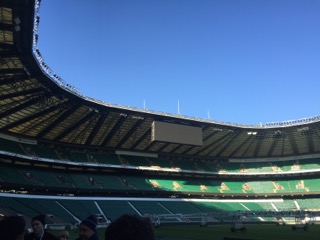
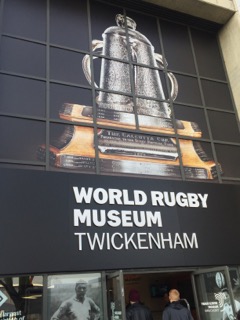
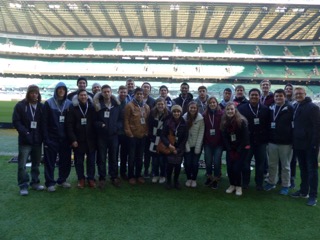
Today we all made the trek to Twickenham Stadium, the national rugby stadium of England. My flat and I took the tube to London’s Waterloo Station, and then took a train to Twickenham, a small town in western London. After arriving at the station there we made the 10 minute walk to the stadium, and met up with the group. The day started off with a tour of the World Rugby Museum. We spent a half an hour walking around getting a small taste of the tremendous history of rugby in England and across the world. There were endless jerseys, pictures, and all of the trophies that are played for in the rugby world. One of the biggest, and most important trophies they had there was the Calcutta Cup. It is the trophy awarded to the winner of the England-Scotland game that is played annually. England is currently winning the overall rivalry, 69-39-14. After we toured through the museum, we listened to a speaker who gave a talk on the history of rugby. We received a brief explanation of how rugby came to be. Our tour guide then took us on the full tour of Twickenham Stadium. We got a first hand look at the luxury boxes, the Royal Box, the Council Room, the dressing rooms, and we got to go pitch side to check out the stadium from a different perspective. Overall it was a great day and we all left more knowledgable about the game of rugby. Now I am going to turn to a Q&A with flat 80 to learn more about what we learned and saw today:

Q: How do you think the tradition of rugby has changed since the introduction of professionalism?
A (Dane Birkeland): I feel that the advent of professionalism has had a positive impact on the game, on balance. The amateur spirt of the game still exists with the respect between the players and the drinking traditional that filter down through the players into the attending fans. The professionalism just adds extra money into the game which helps with player careers, stadium improvements, and more research into player health. Now more player can make careers of rugby and the sport has increased as a competitive atmosphere, which is goos for the players and fans alike. So on balance, the acceptance of professionalism has benefited the game in many more ways than it has damaged its traditions and values.

Q: How has the game and the history of rugby been affected by the split of the Rugby Union and the Rugby League?
A (Ian Doherty): While I cannot be certain I think the split of rugby has had negative consequences for the sport as a whole. Obviously, people still follow and care about rugby but I think the following could be much stronger if there was just one professional league. With just one league the competition would be much stronger and it would bring together all of the fans from both leagues. I’m not sure if rugby could compete with soccer but I think it could have been more popular not only in the UK but across the world had the Union and League chosen not to split and rather competed against one another.

Q: Compare Twickenham to the other football stadiums that we have toured or watched a game in.
A (Tyler Rolland): Comparing Twickenham to the football stadiums that we have attended, it is very clear that the Twickenham Stadium has a much larger capacity. With the capacity of 82,500 people which can attend any given game, it’s size is very evident approaching and sitting inside the stadium. Twickenham also has a lot more pubs on it’s grounds. The sale of beer is prohibited during the play of football games and drinks aren’t allowed in the stands which means less pubs and concessions at the football stadiums. Rugby games do not have this restriction, therefore the spectators at the rugby games can drink quite a large amount. The last main difference between Twickenham and the average football stadium is the lack of security/police. During a football game the stands are overwhelmed with security guards separating the opposing fans and the home crowd, at a rugby game there are zero security inside of the Twickenham Stadium.twickenham 4 twickenham 3 twickenham 2 twickenham


Tottenham vs. Leicester City

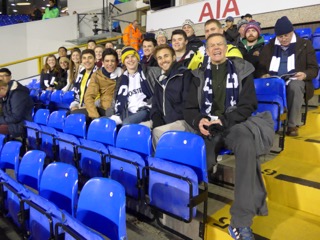
Wednesday’s match pitted two of the top teams in the Barclays Premier League against each other at the iconic White Hart Lane, and we were lucky enough to be a mere six rows from the field. Seated directly on the touch line, we had a great view to experience the speed of play and quality of touch on the field. The match was a replay of last Sunday’s third round FA CUP match pitting top of the table Leicester City against 4th place Tottenham Hotspurs. Despite the recentness of their previous match, the two teams played energetic football and there were many dangerous chances throughout the game, before Robert Huth, a center back, scored a late corner in the 83rd minute to give Leicester City the victory.

P1000069
Some of the guys before the game. From left: Bob (our program director), Zach, Tristan, Robbie, Chris, and Acer
P1000071
The ladies before the game. From left: Cassie, Maggie, Katie, Amrit, and Connor

After the ball found the back of the net, Huth went to straight to our corner as he was mobbed by teammates and wildly cheered on by the Leicester City fans, who were seated directly to the right of us. The Leicester City fans created a tremendous atmosphere all night as they chanted in support of their own players, while jeering the referee and even some of the Tottenham fans in our section. The good nature jawing between fans was an experience unseen in American sports and honestly quite humorous. Thankfully, it remained good natured and did not revert back to the hooliganism that cast a black eye on the Premier League for decades.


P1000074
A group shot in our seats

In my opinion, Tottenham was unlucky on the night after deserving to come away with at least a point for their effort. Below is a video of one such chance, a corner in the 11th minute that was saved off of the goal line by Leicester City goalkeeper Kasper Schmeichel. Nonetheless, the Spurs had many other quality chances: including a second half strike that was deflected by Schmeichel before hitting the cross bar and bouncing away from goal.

To see a corner kick from our seats:

corner kick video


We sat right next to the Leicester fans. Here’s a clip of them singing:


-Acer, Maggie, Stephen, Ethan, and Nick

Aston Villa v. Crystal Palace Match

We departed Ability tours on a coach bus at around 14:00 headed towards Birmingham to watch Aston Villa play Crystal Palace. 3 hours and a pit stop later, we arrived at Villa Park. After Bob handed us our tickets, most of us went to the team store to stock up on Aston Villa gear. A plethora of scarves, beanies, and jerseys were purchased, and Bob beamed with happiness and excitement. We then entered the stadium and took our seats, which were in the upper tier (amazing view). Surprisingly, even in such a large stadium, the upper seats felt close to the pitch, and not alienated like some stadiums in the US. As the match got under way, Crystal Palace was the first to strike at goal, with a shot that deflected off the far post and out just a minute into play. After which, the play slowed down and was more controlled for the majority of the game, which was filled with sporadic cheering and singing from the home supporters. Finally, as the game was winding down, Aston Vila, who had been winless since August, squeaked out a goal off the head of the captain, Jolean Lescott. In what could have been number one on ESPN’s Not Top 10, Wayne Hennessey let the ball slowly dribble through his legs and across the line for what would be the deciding goal in Villa’s second victory of this season.12421923_10205704343152242_1946392992_o 12499390_10205704343432249_1489698519_o 12545705_10205704343072240_1028407525_o 12545786_10205704343032239_1099430477_o 12557694_10205704343712256_343752810_o

-Acer and Co.

Emirates Stadium, London Dining, and St. George’s Park!

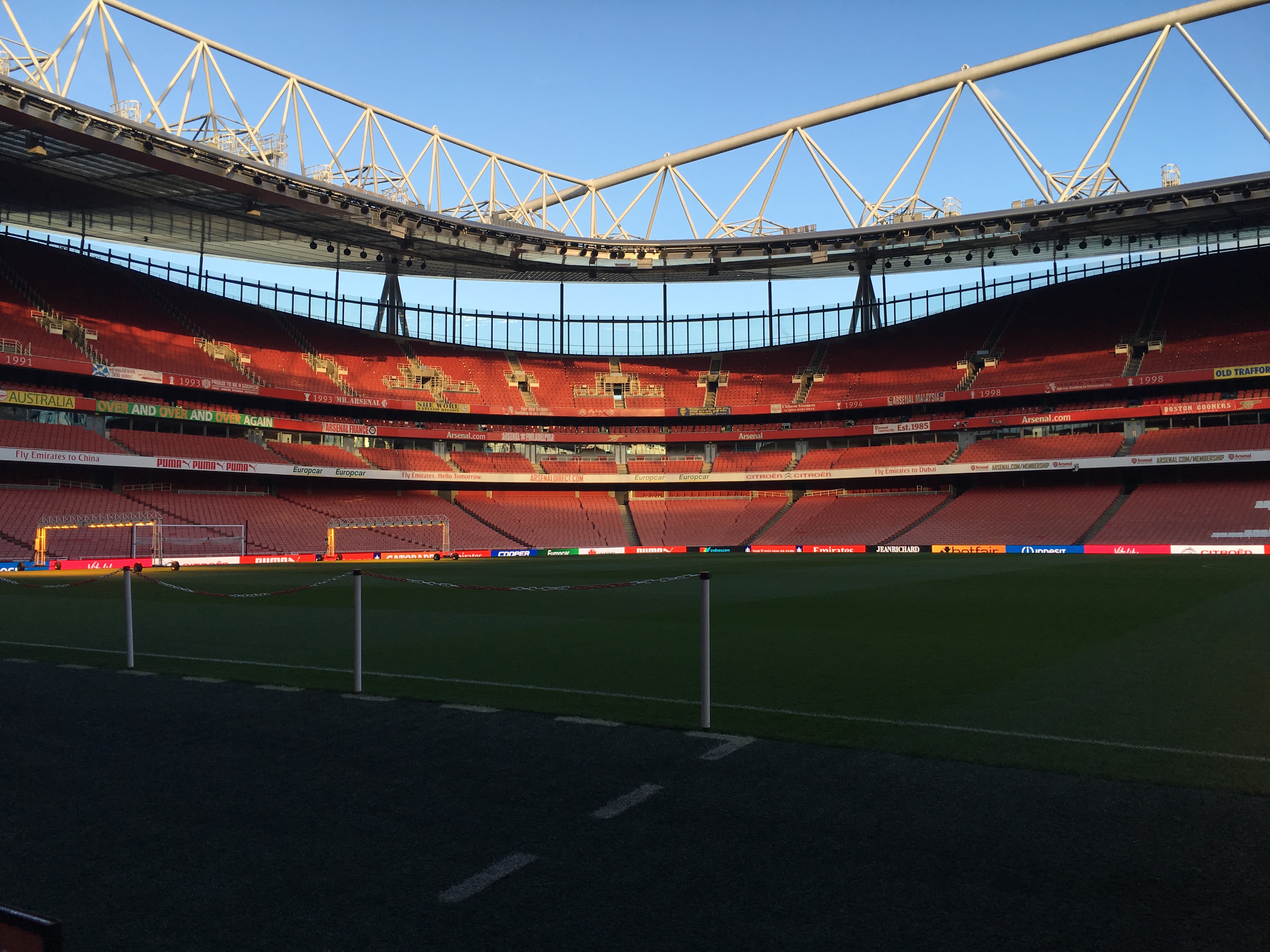
Day 5: Today we learned the history of English futball from one of the UK’s most renowned sports historians- Simon Inglis. We began our day in the classroom where Simon took us through how all the clubs in London were formed. To give you just an idea, he quoted “In order for a club to make a little fortune, you’ll first need a large one.” This is pretty funny given the history surrounding Arsenal. This team has the longest membership in the top division, which all started under mysterious (but potentially illegal) circumstances. Simon went through their history with us on a more in depth level. Then he took us on a walking tour of the old Arsenal stadium, which is now an apartment complex! We ate at one of the classic futball diners where all the fans pack in to get food before the game. Everyone was treated to a bowl of warm vegetable soup and a plate of eggs, bacon, and chips. Bacon here is ham. Then we went on to tour their current stadium- Emirates Stadium. We got a behind the scenes look at what it’s like to sit in the director’s club, be on the field, hangout in the locker room, and even hold a press conference. It was definitely a once in a lifetime experience 🙂

Day 6: Off day! Some of us went to the pub and watched the Arsenal match. It’s really fun to hang around all the fans and be in such a new environment. The pub had huge screens playing futball matches and rugby matches. Interestingly enough, more people were watching the rugby match than the Arsenal match. I thought the futball game would’ve drawn a larger crowd since the FA cup is happening now but sports are completely different here. Hopefully I’ll learn more about rugby, but right now I have absolutely no idea what’s going on there.

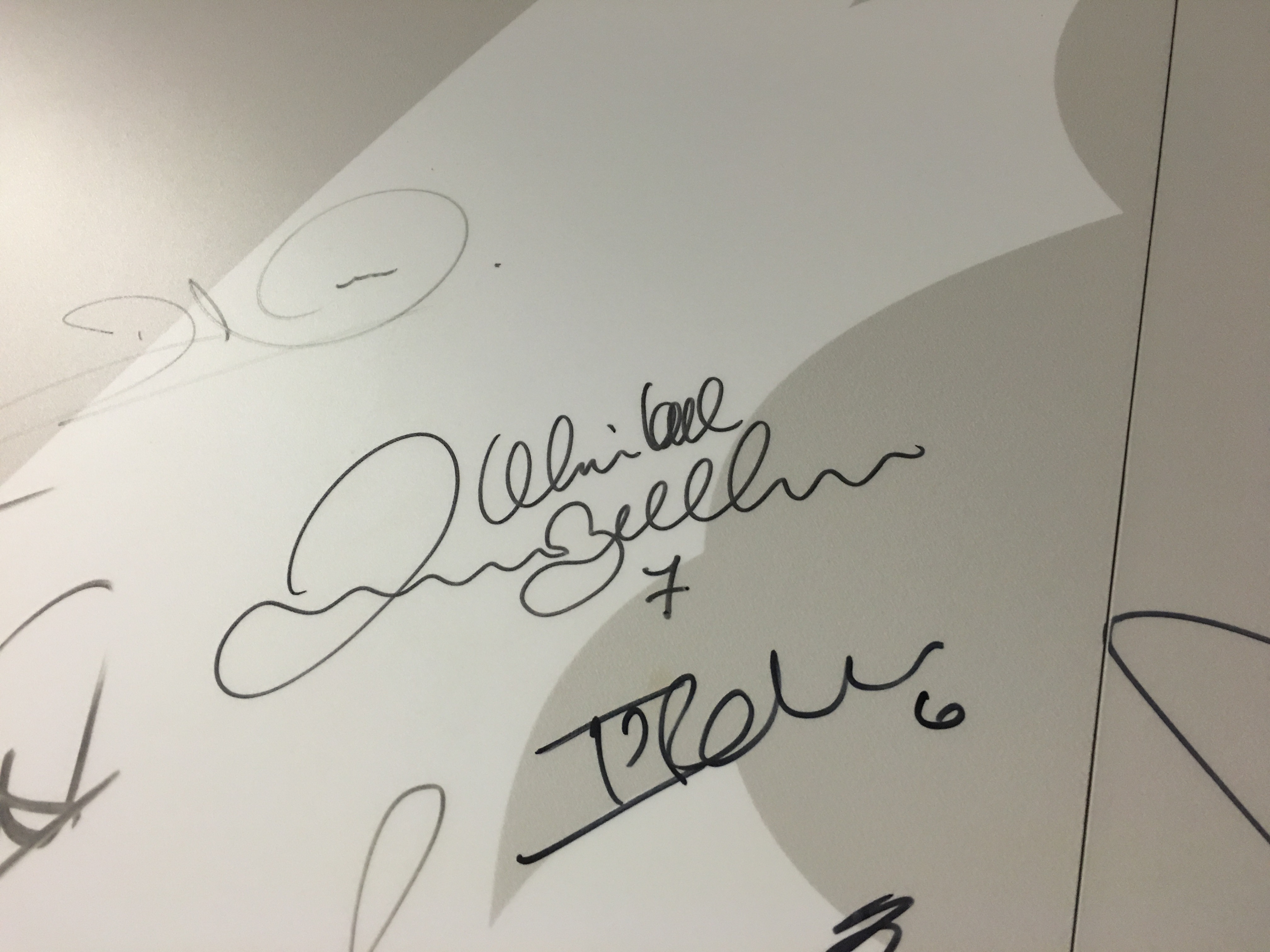
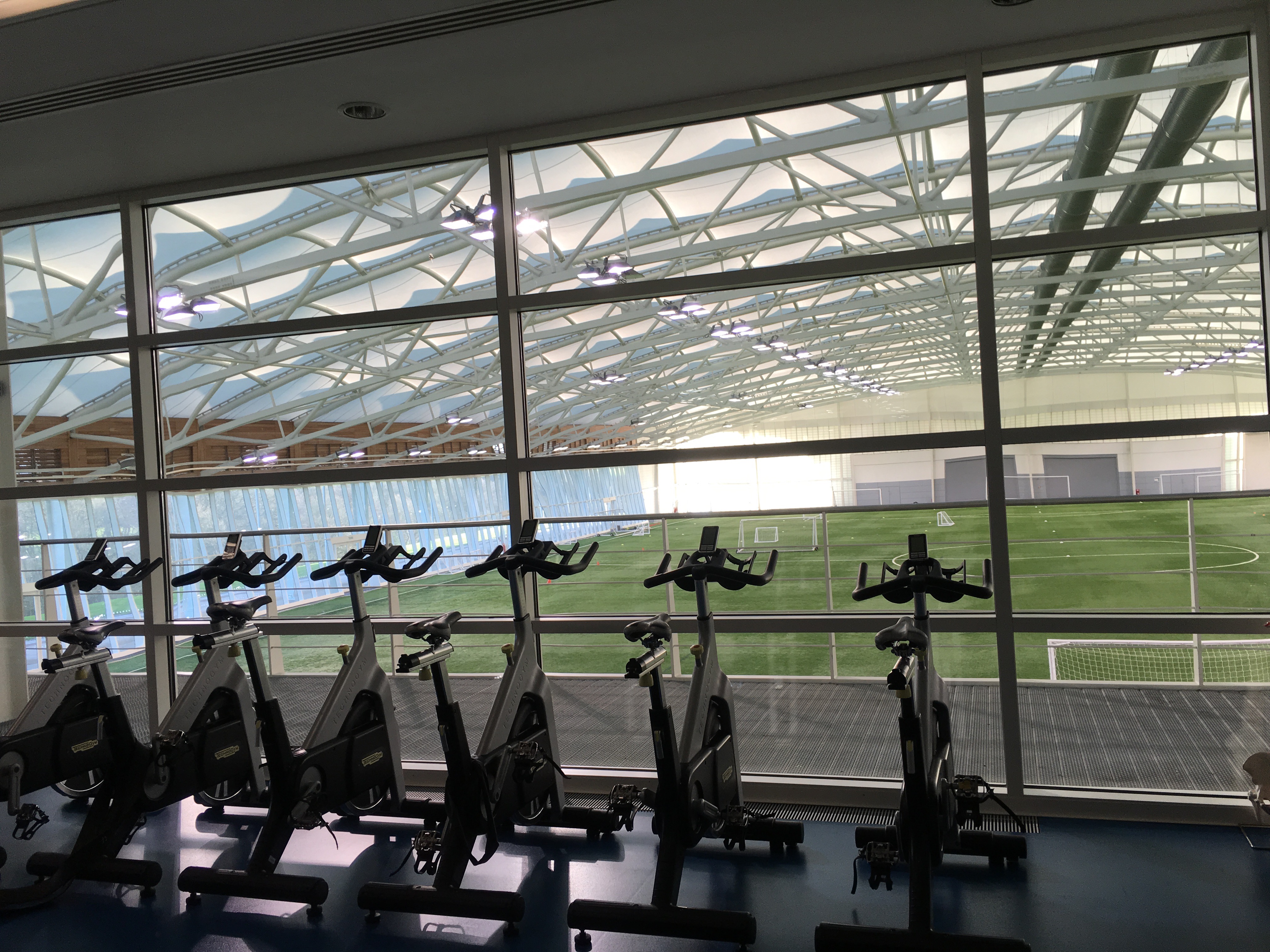
Day 7: This is my favorite day so far. We rode a team bus, filled with tables, tvs, and a bunch of other amenities, to St. George’s Park. This is where the FA built their training stadium. It’s a state of the art facility fit for all the professional futball and even some rugby teams. We got a private tour of all the coolest parts, including a wall signed by all the famous players who’ve come in to train there (David Beckham!!) and their amazing strength and conditioning rooms. We then got ready for a FA training session on the turf that all the national teams get to use. The room and fields are primed to be exact replicas of the conditions the teams will be playing on in their upcoming match. For example, the room today was super cold to mimic the temperature outside. The groundsmen have gone so far as to rip up parts of the fields to make sure it’s an exact replica. Our two coaches took us through a series of drills that incorporated skills from all the different sports we play- hand drills for football and volleyball players, bounce drills for basketball players, they even through disks in the air for the frisbee players. We split up into two teams at the end and played a fun, but competitive game of soccer. We weren’t technically keeping score but if we were, the white team for sure won 6-1. It was a great day and another amazing experience. The coaches made it even better with their senses of humor. They noted at the end that soccer (futball) is the only real sport and that all other sportsmen are playing a game for their own leisure.


IMG_0021

David Beckham’s signature on the wall at St. George’s Park

IMG_9992

Rainbow over Emirates Stadium

IMG_9996

Tunnel to the field

IMG_0008

The Ladies of London take on Emirates Stadium!

IMG_0010

View from the ground level

IMG_0019

Strength and conditioning room at St. George’s Park

IMG_9987

Emirates Field

—Cassie